
The organ meat supplement category has grown significantly over the last few years. What was once a niche clinical recommendation has become a mainstream wellness product. And with that growth has come a predictable problem: not all products are made the same way, and most consumers have no idea what to look for.
As someone who recommends organ meat capsules in clinical practice, I want to be specific about why formulation matters — because when it comes to supporting iron status, the ratio of ingredients isn’t incidental. It’s the entire point.
Why Cofactors Are the Whole Conversation
Iron doesn’t function as a standalone nutrient. Its absorption, transport, storage, and utilisation depend on a network of cofactors working in concert — and when any one of them is missing or insufficient, the entire system underperforms.
The key players:
- Vitamin A (retinol) — mobilises iron from storage and supports the production of transferrin, the protein that carries iron in the blood
- Copper — essential for ceruloplasmin and ferroxidase enzyme activity, which regulate iron export from cells into circulation. Without adequate copper, iron can accumulate in tissues rather than being used
- Folate (B9) — required for DNA synthesis and red blood cell maturation; deficiency directly impairs the erythropoiesis that iron is needed for
- Vitamin B12 — works alongside folate in red blood cell formation; B12 deficiency can produce a megaloblastic anaemia that coexists with or masks iron deficiency
- Riboflavin (B2) — supports the mobilisation of iron from storage and the conversion of ferric iron to its absorbable ferrous form
This is why isolated iron supplementation so frequently falls short in clinical practice. You can dose iron aggressively and still see suboptimal outcomes if the cofactor network isn’t there to support it. The body needs the whole picture.
What This Has to Do With Organ Meats
Liver and spleen don’t just contain iron. They contain iron within the exact nutritional matrix required to absorb and use it — all naturally co-occurring in a food the human body evolved to receive.
The spleen is one of the most concentrated wholefood sources of heme iron available. Its role in red blood cell recycling means it is exceptionally rich in haemoglobin and myoglobin — the proteins that carry oxygen and provide iron in its most bioavailable form. Liver, on the other hand, is the nutritional powerhouse for the cofactor side: B12, retinol, folate, riboflavin, and copper in meaningful amounts.
Together, they provide something no synthetic supplement does: the complete nutritional context for iron to actually work.

Why the Ratio Matters
Here’s where it gets more nuanced — and where I want to be specific about what I look for when recommending an organ meat supplement to clients.
The balance between spleen and liver in a formulation isn’t arbitrary. Spleen drives the heme iron contribution. Liver drives the cofactor contribution. A product that skews too heavily toward liver delivers excellent cofactor density but relatively less heme iron. A product that skews too heavily toward spleen delivers concentrated heme iron without the full cofactor complement needed to use it.
An intentional formulation accounts for this. It’s blended to deliver both — heme iron and cofactors — in amounts that are clinically meaningful, not just present on a label.
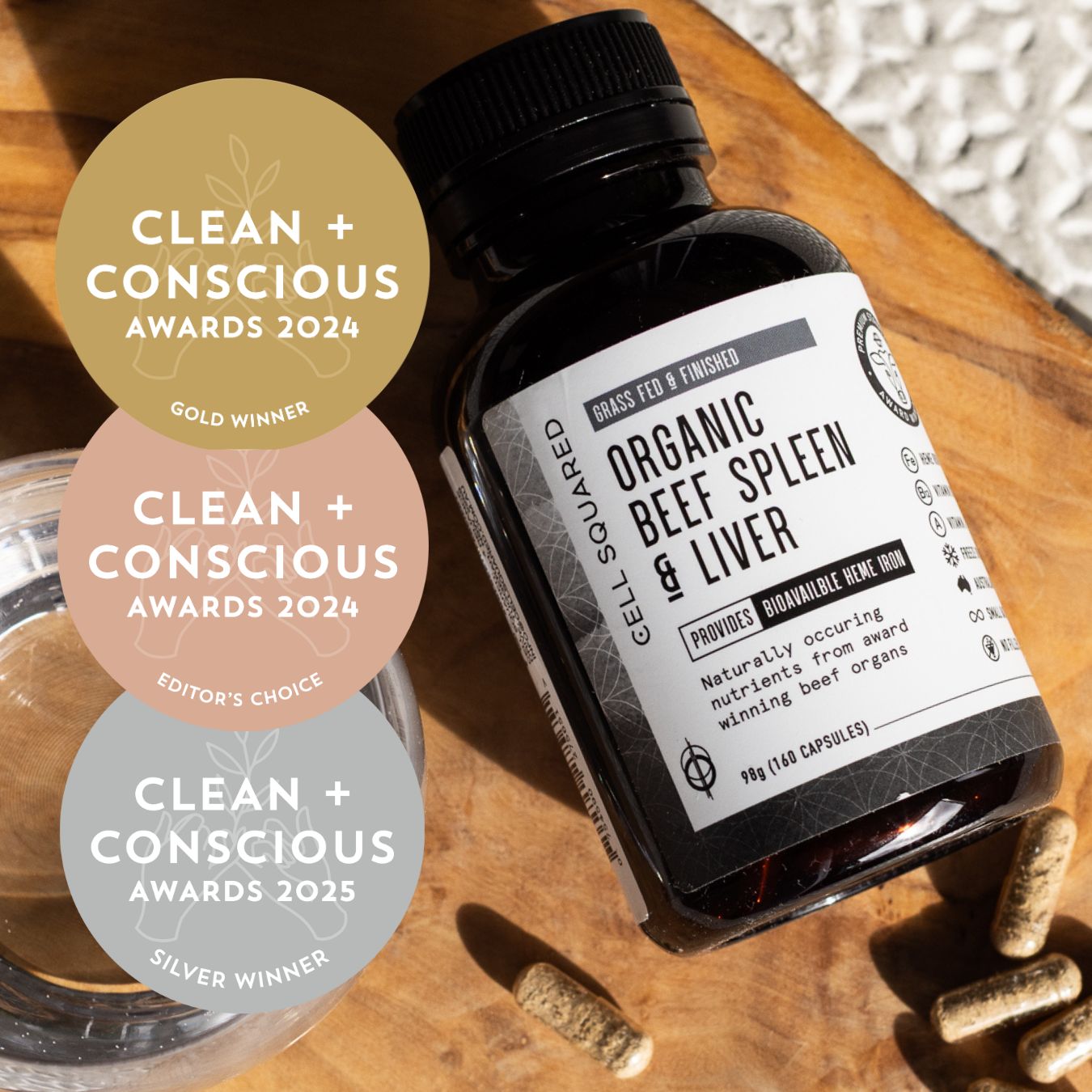
Cell Squared used their own nutritional testing data to consciously formulate their spleen-to-liver blend to achieve exactly this. Each serve of 6 capsules delivers 86% RDI of heme iron (10.3mg) alongside 305% RDI of vitamin B12, 68% RDI of vitamin A, 21% RDI of folate, and 12% RDI of riboflavin — all naturally occurring, not added. That’s the difference between a consciously formulated product and one that’s simply put two ingredients in a capsule and called it done.
Shop the capsules
Cell Squared Organic Beef Spleen & Liver Capsules: concentrated heme iron with the cofactors it needs.
Shop Spleen & Liver Capsules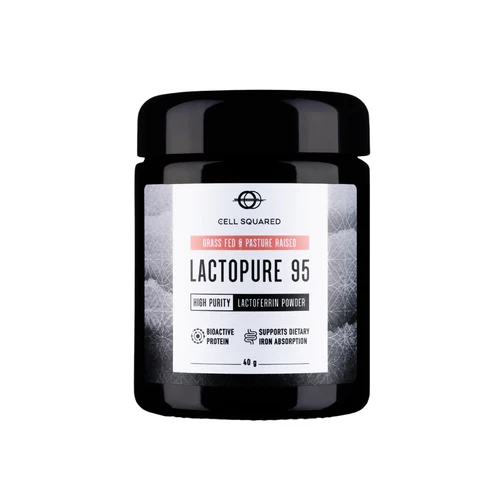
Pair it with LactoPure 95
Use code TNNLACTO for a limited time discount of $20 off LactoPure 95.
Shop LactoPure 95What I Look For in Practice
When I recommend an organ meat supplement to a client, I’m looking for:
- Grass-fed, pasture-raised source animals — nutrient density is directly influenced by the quality of the animal’s diet and living conditions
- ACO certified organic — third-party audited from farm to powder, not just a marketing claim
- Freeze-drying over heat processing — freeze-drying preserves the heat-sensitive nutrients (particularly B vitamins and retinol) that make organ meats valuable in the first place
- No fillers, flow agents, or synthetic additives — the product should be the food, nothing else
- An intentional spleen-to-liver ratio that delivers cofactors in meaningful, not token, amounts
- HASTA certification — independently tested, which matters particularly for women who are athletes or have specific compliance requirements
Cell Squared ticks every one of these. Their beef spleen and liver powders are ACO certified organic, sourced from 100% grass-fed and grass-finished cattle raised on regenerative farms in remote Australia, freeze-dried in small batches, and encapsulated with nothing added — no GMOs, no fillers, no flow agents, no hormones, no antibiotics. The product is also HASTA certified, meaning it’s been independently tested — something that matters to my clients who take their health seriously enough to want verification, not just a promise.
The Bigger Picture
Iron deficiency is still one of the most prevalent nutrient deficiencies globally, and women of reproductive age carry a disproportionate burden of it. Heavy periods, pregnancy, gut dysfunction, and chronically inadequate dietary intake all contribute — and they’re not going away.
What can change is how we approach correction. Moving away from isolated synthetic iron toward whole-food strategies that provide iron within its natural nutritional context is, in my view, one of the most important shifts in this space. But it only works if the whole-food strategy is formulated with the same rigour we’d apply to any clinical intervention.
Formulation matters. Sourcing matters. Ratios matter. And not all organ meat supplements are created equal.
Masterclass, now on demand
Rethinking Low Iron
Want the full clinical picture? Rethinking Low Iron covers why your ferritin number doesn’t tell the whole story, how to interpret your iron studies, the root causes, the reference ranges, and why most iron supplements fail.
Get Rethinking Low Iron